
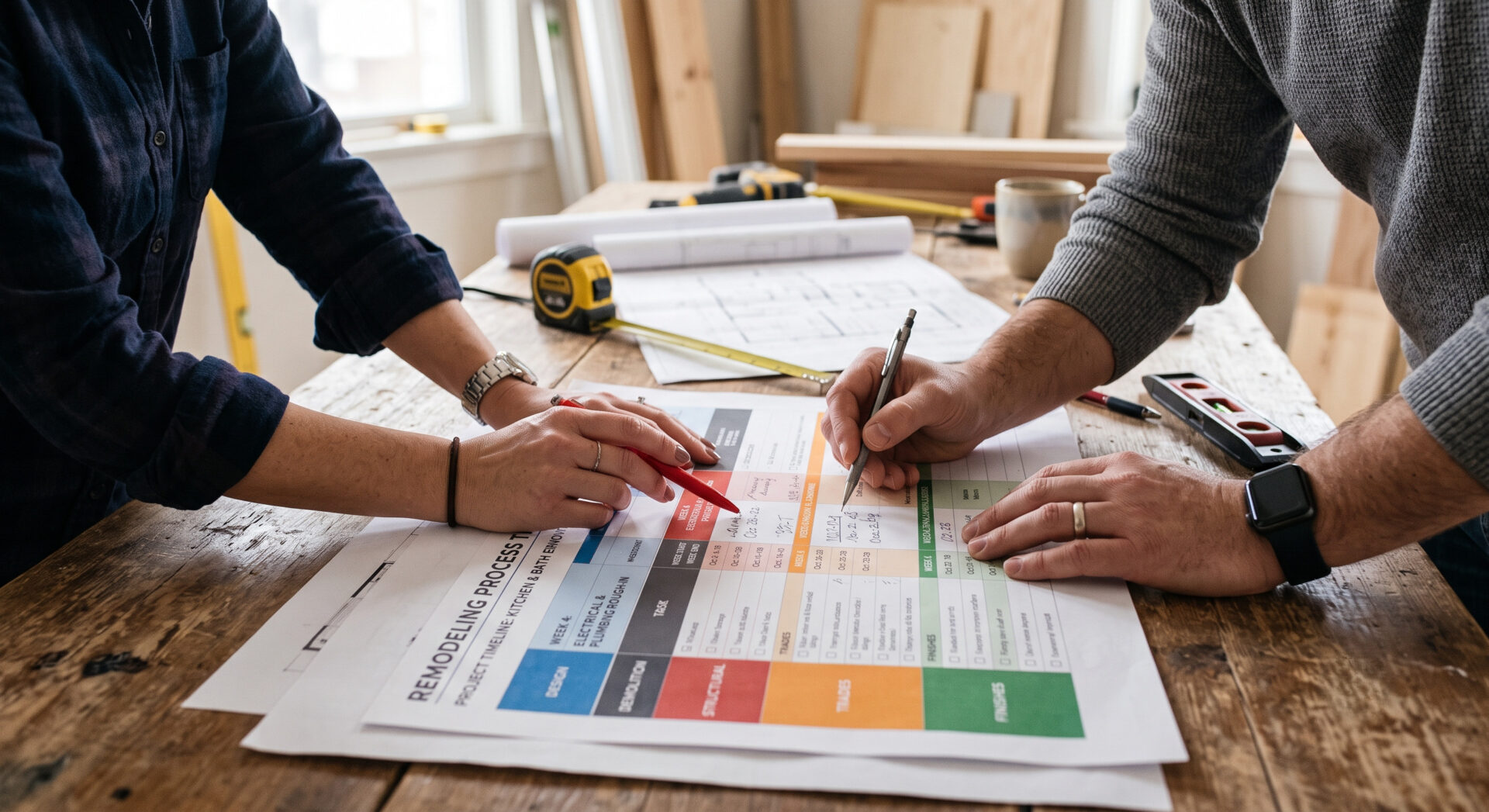
When homeowners first begin planning a remodel, one of the first questions they ask is:
“How long will my project take?”
It’s a great question—but the answer is often different than people expect. Many homeowners assume construction is the longest part of a remodeling project. In reality, the planning and preparation that happen before construction begins often take nearly as long—and for some projects, even longer.
While it’s natural to want to get to demolition and construction as quickly as possible, taking the time to thoughtfully design your project, finalize selections, and prepare every detail creates a smoother experience and better results. At Tabor Design Build, we’ve found that investing more time upfront leads to fewer surprises, fewer delays, and a more enjoyable remodeling experience for our clients throughout Northern Virginia, Maryland, and Washington, DC. Here’s what a realistic remodeling timeline looks like.
Remodeling Happens in Three Major Stages
Every project is unique, but most design-build remodels follow three primary phases:
- Planning & Design
- Pre-Construction
- Construction & Completion
While these phases may overlap at times, understanding each one helps set realistic expectations and keeps your project moving efficiently.
Stage One: Planning & Design
Typical Timeline: 2–3 Months
This is where the foundation for your entire project is created. Although homeowners are often eager to begin construction, this stage is arguably the most important part of the remodeling process. During Planning & Design, we’ll work together to understand not only what you want your home to look like—but how you want it to function for years to come.
This phase typically includes:
- Initial consultation and project discovery
- Existing home measurements
- Concept development
- Floor plans
- Design refinement
- Budget development
- Engineering coordination
- Material and finish selections
- Project pricing
Unlike traditional remodeling, where many decisions are made during construction, Tabor’s design-build process focuses on making as many decisions as possible before work begins. That means you’ll know what your project will look like, what materials will be used, and how the project will be executed before construction starts.
Material Selections Are Part of the Design Process
One of the biggest surprises for homeowners is just how many selections are involved in a remodel. Cabinetry, countertops, flooring, plumbing fixtures, lighting, tile, paint colors, hardware, appliances, doors, windows, and trim all need to be thoughtfully coordinated. Many custom products also have extended lead times, making early selections essential to keeping the project on schedule. By completing these decisions during design, construction can proceed with far fewer interruptions.
Stage Two: Pre-Construction
Typical Timeline: 1 Month
Once the design is complete, the project shifts into preparation. Although construction hasn’t begun yet, a tremendous amount of work is happening behind the scenes.
This stage often includes:
- Final construction drawings
- Permit applications
- Material ordering
- Trade partner scheduling
- Site logistics
- Project coordination
Permitting in the Metro DC Area: 1-6 Months
One of the least predictable parts of any remodeling project is permitting. Every jurisdiction has its own review process, timelines, and requirements. Whether your home is located in Arlington, McLean, Alexandria, Fairfax County, Bethesda, Chevy Chase, Montgomery County, or Washington, DC, permit review times can vary significantly depending on the scope of work. Projects involving structural changes, additions, or historic properties often require additional review. The good news is that while permits are being processed, your project team continues preparing materials, coordinating schedules, and planning construction so work can begin as efficiently as possible once approvals are received.
Stage Three: Construction & Completion
Typical Timeline: 3–9+ Months
With planning complete and permits approved, construction begins. Depending on the scope of your remodel, this stage may include:
- Demolition
- Framing
- Plumbing, electrical, and HVAC rough-ins
- Insulation and drywall
- Cabinet installation
- Flooring
- Interior finishes
- Painting
- Trim work
- Fixture installation
- Final detailing
Throughout construction, your dedicated project team manages the schedule, coordinates skilled craftsmen, and keeps work progressing toward completion. Because so much planning has already been completed, construction tends to move more efficiently with fewer unexpected changes.
Inspections and Final Walkthrough
Throughout the project, required inspections help ensure work meets local building codes and safety requirements. As construction nears completion, your project team performs a detailed walkthrough to identify any final touch-ups before you begin enjoying your newly remodeled home. It’s the final step in ensuring every detail reflects the quality and craftsmanship Tabor Design Build is known for.
Why Planning Is the Most Important Part of a Successful Remodel
Homeowners often think remodeling begins with demolition. In reality, successful remodeling begins months earlier. The time invested in thoughtful design, detailed planning, and product selections reduces uncertainty once construction begins. Rather than making important decisions in the middle of construction, those choices have already been made, allowing your project to move forward with greater confidence and fewer interruptions. This proactive approach helps minimize delays, reduce change orders, and create a smoother experience from start to finish. Simply put, the more work that’s completed before construction begins, the more efficiently construction can move forward.
Every Remodeling Timeline Is Different
No two homes—or homeowners—are exactly alike.
A kitchen remodel may require several months from the initial consultation to completion, while a whole-home renovation or major addition can take a year or longer when planning, permitting, and construction are combined. Project complexity, permitting requirements, material availability, and the level of customization all influence the overall timeline. At Tabor, our goal isn’t simply to complete projects quickly—it’s to complete them thoughtfully, with exceptional craftsmanship and a process that gives homeowners confidence every step of the way.
Ready to Start Planning Your Remodel?
Whether you’re considering a kitchen renovation, bathroom remodel, home addition, whole-home renovation, or outdoor living project, understanding the timeline is the first step toward a successful remodeling experience. For more on our design-build process, click here.
Contact Tabor Design Build today to schedule your consultation and begin planning your home transformation.